
Is Your AI Nose Job Setting You Up For Disappointment?

When it comes to physical insecurities, many of us have features we've spent years fixating on. As we get older, we either grow into them, learn to accept them, or they continue to plague us. Noses, in particular, have long ranked among the most common features people choose to change surgically. Several of my friends have gotten nose jobs over the years. Some blamed a "deviated septum," while others were completely upfront about wanting a cosmetic change.
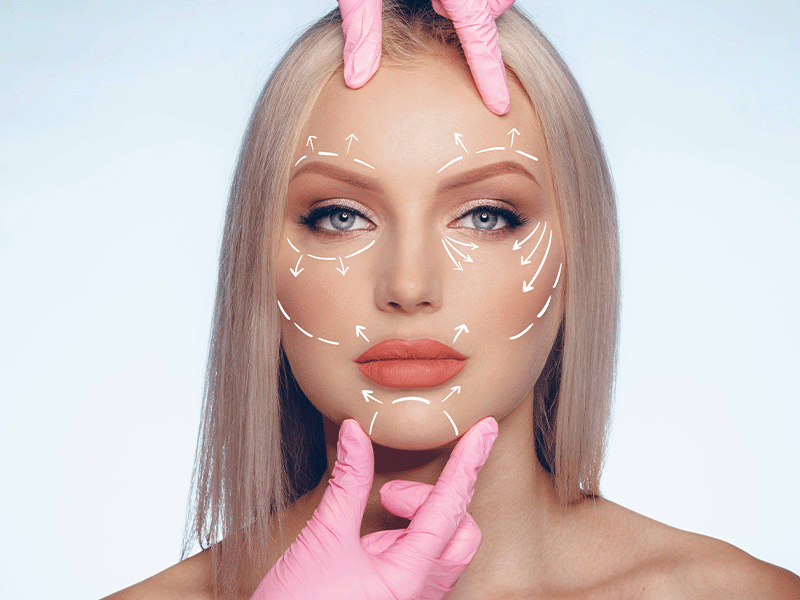
Now we're entering a new era of beauty standards. Thanks to increasingly sophisticated AI, it's possible to see highly realistic versions of ourselves before ever stepping into a surgeon's office. This goes far beyond the cartoonish Snapchat and Bold Glamour filters of the past.
Instead of trying on a new hairstyle or a pair of sunglasses online, we can now "try on" cosmetic procedures with a few taps. The technology is undeniably fascinating, but it also raises a bigger question: If AI can show us an idealized version of ourselves before we ever meet with a surgeon, is it helping us make more informed decisions, or setting unrealistic expectations? To separate fact from fiction, I spoke with three board-certified plastic surgeons.
AI Filters vs. Surgical Simulations
If you've ever used a nose job filter on TikTok, Instagram, or Snapchat, you've probably seen how quickly AI can generate a more sculpted version of your face. Apps like Facetune and Meitu take it a step further, letting users reshape their noses with the swipe of a finger. These tools are designed to create an idealized result, not one that's based on your anatomy or what's actually achievable through surgery.
"The consumer filters are essentially a beauty app that applies a generic, idealized nose algorithmically with no knowledge of your bone structure, skin thickness, or airway, and no concept of what's medically feasible," says board-certified plastic surgeon Krishna Vyas, MD. "A filter is designed around what looks aesthetically pleasing on a screen, while surgical planning is based on what can be safely and realistically achieved for that patient's nose."


Comments